
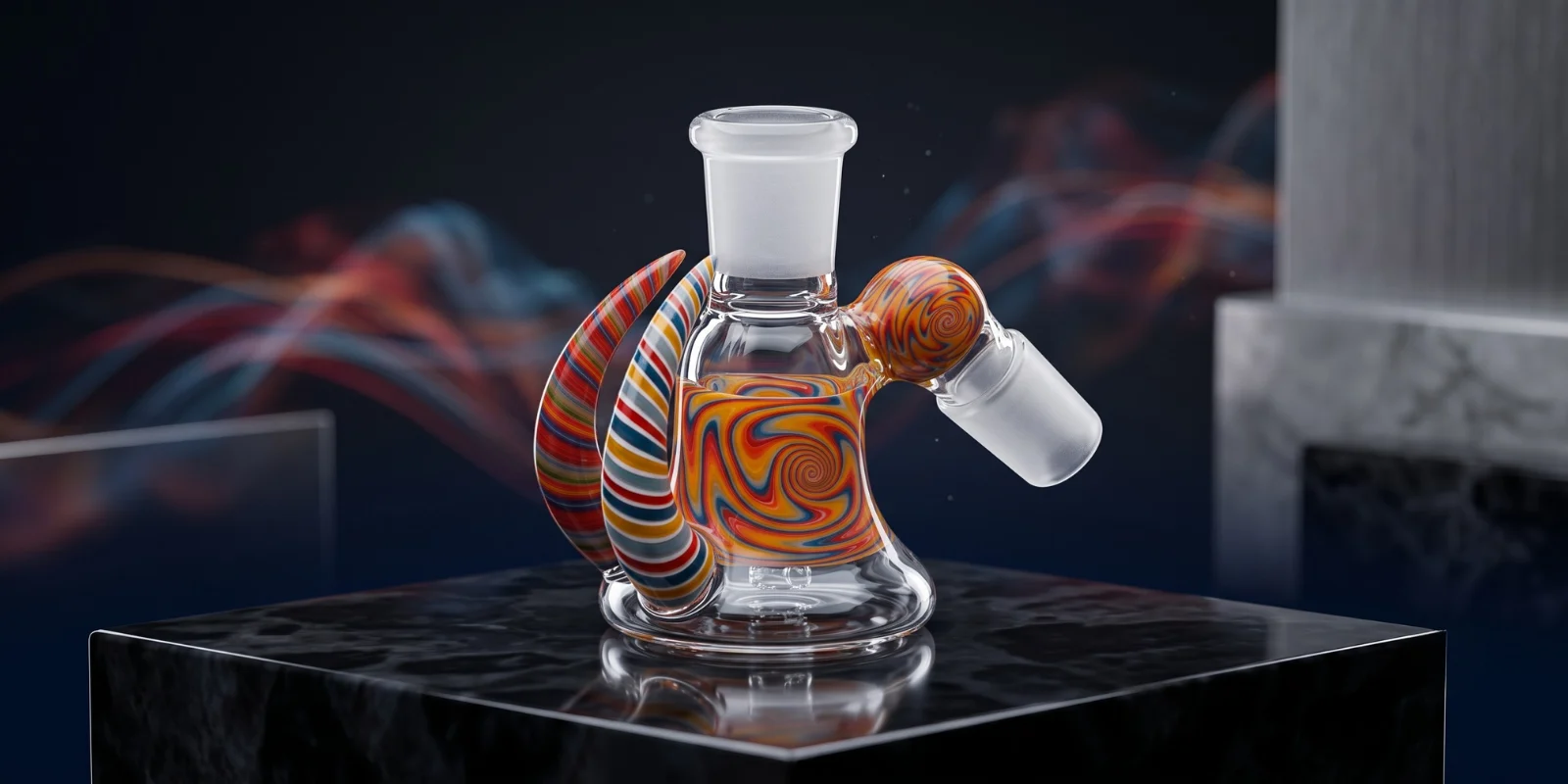
After just a couple of bowls, your bong water looks murky, the flavor starts fading, and cleaning suddenly feels like another chore. That's exactly where an ash catcher earns its spot. Sitting between your bowl and bong, it traps ash, burnt flower, and sticky resin before they ever reach the main chamber, while adding an extra layer of filtration for cooler, smoother pulls.
It is a simple upgrade, but it can make a real difference. In this guide, we will explain how ash catchers work, what to look for when choosing one, and how the right fit can help keep your bong cleaner for longer.
What Is An Ash Catcher?
An ash catcher is a removable glass attachment that sits between the bowl and the bong. It serves as a first-stage filter, trapping ash and debris before they reach the main chamber. Some models also cool and filter the smoke while helping keep the bong cleaner for longer.
What Are The Different Types Of Ash Catchers?
Ash catchers generally fall into two categories: dry and wet. The main difference is whether they use water and a percolator for added filtration.
Dry Ash Catchers: Use an empty glass chamber to collect ash, resin, and loose debris. Compact designs, such as the EG Glass Wig Wag Ash Catchers, are debris-focused attachments that do not add a large filtration chamber.
Wet Ash Catchers: Hold water and include a diffuser or percolator to cool and filter smoke before it reaches the main chamber. A model with a barrel diffuser provides additional diffusion and collects debris.
Beyond choosing between dry and wet models, check the joint angle carefully. Some designs, such as the Cookies Bite Ash Catcher, are available in both 45-degree and 90-degree options to suit different bong connections.
Common Percolator Types
Showerhead Perc: Offers balanced filtration with relatively open airflow.
Honeycomb Perc: Creates many small bubbles for strong diffusion but may clog more easily.
Tree Perc: Uses several glass arms for added cooling, though the internal parts can be fragile.
Matrix Perc: Uses a grid of slits for high diffusion but may require a stronger pull.
How Does An Ash Catcher Work?
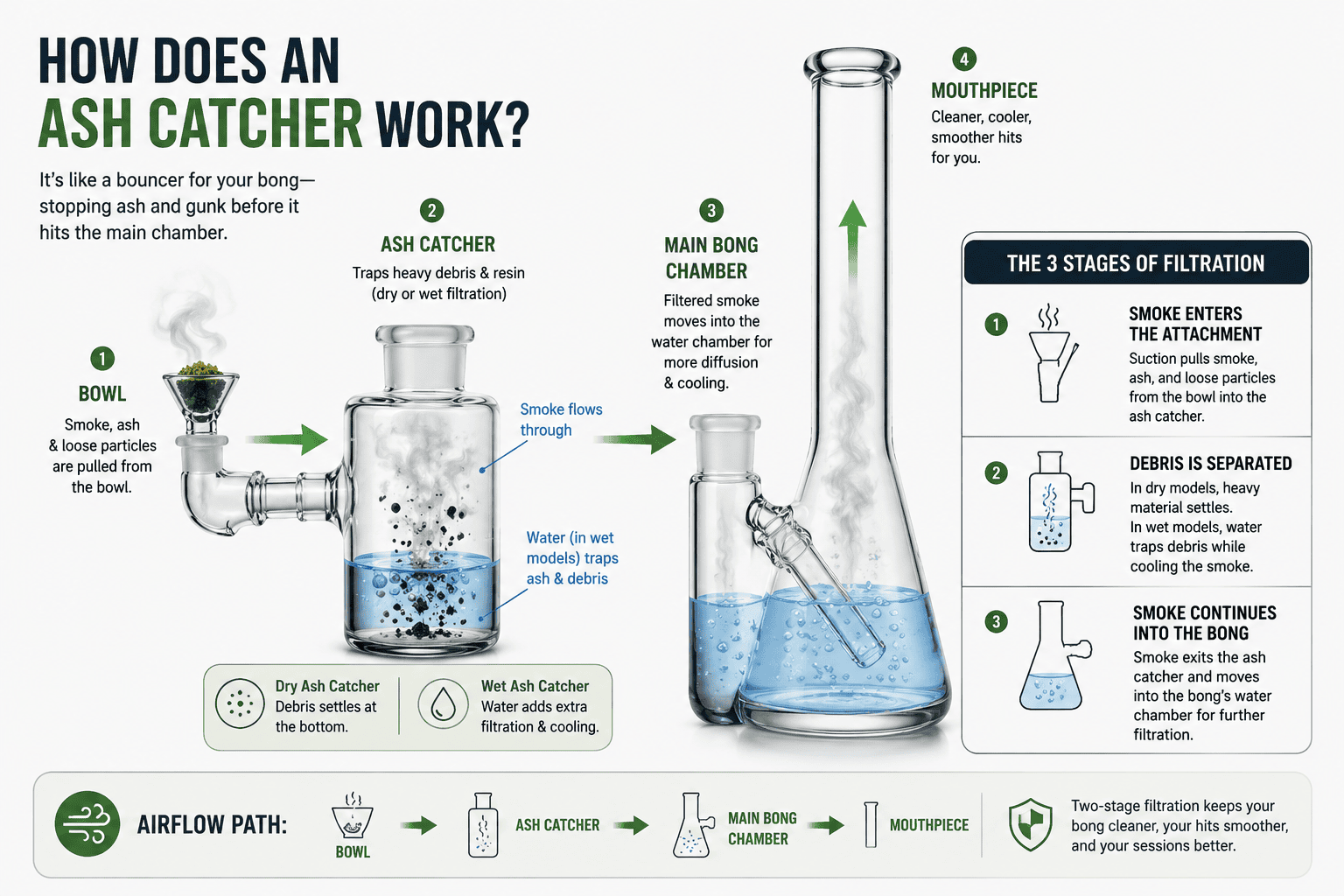
When you inhale, smoke leaves the bowl and enters the ash catcher before moving into the bong’s main chamber. This early interception allows the attachment to separate heavier ash and debris from the airflow before the smoke continues through the setup.
The process works in three simple stages:
Smoke Enters the Ash Catcher: Smoke travels from the bowl to the catcher via the intake tube.
Ash and Debris Are Separated: In a dry ash catcher, heavier particles lose momentum and settle inside the chamber. In a wet model, smoke passes through water, which helps trap debris while adding another stage of cooling and diffusion.
Smoke Moves Into the Bong: The smoke exits the ash catcher and enters the bong’s main chamber for a second round of water filtration.
Airflow path:
Bowl → Ash Catcher → Main Bong Chamber → Mouthpiece
The bowl connects to the upper joint of the ash catcher, while the lower joint attaches to the bong. This creates a two-stage setup in which the ash catcher handles much of the loose material before it can collect in the main water chamber.
Pro Tip For Ash Cather Success: Keep the water just above the perc slits, rinse the catcher regularly, and double-check the joint size, gender, and angle before buying. The right fit and water level help prevent drag, splashback, and buildup. |
What Are The Key Benefits Of An Ash Catcher?
An ash catcher does more than collect debris. It can help improve filtration, reduce cleaning time, and keep the overall experience more consistent from start to finish.
Keeps the Main Chamber Cleaner: Traps much of the ash, burnt material, and resin before it enters the bong water.
Adds Another Filtration Stage: Water-filled models can provide extra diffusion and percolation for cooler, smoother pulls.
Makes Cleaning Easier: Rinsing a small attachment is usually quicker than deep-cleaning the entire bong.
Helps Preserve Flavor: Cleaner water means less stale buildup during a session, so later pulls can taste closer to the first.
How To Choose The Right Ash Catcher
The right ash catcher should fit securely, sit at the correct angle, and keep your bong stable. Before buying, check the joint size, gender, angle, and overall weight.
1. Joint Size
Your ash catcher must match your bong’s joint size. A 10 mm joint is usually found on compact pieces; 14 mm or 14.5 mm is the most common size, and 18 mm or 18.8 mm is typically used on larger bongs. A direct fit is usually better than adding an adapter.
2. Joint Gender
The connecting joints must be compatible. Male joints extend outward, while female joints have an inward opening. Also check that your existing bowl fits the upper joint of the ash catcher.
3. Joint Angle
Match the ash catcher’s angle to the bong. A 45-degree catcher generally suits angled downstems and beaker bongs, while a 90-degree design works better with upright joints and straight tubes. The wrong angle can cause the attachment to sit unevenly or spill water.
4. Weight and Stability
Ash catchers add weight and shift the bong’s balance. Smaller pieces are better suited to compact, lightweight models, while wider and heavier bases can support larger water-filled designs.
How To Clean Your Ash Catcher
A simple rinse-and-soak routine helps prevent resin buildup and keeps airflow clear.
Empty the Water: Pour out used water after each session.
Add Cleaner: Fill the chamber halfway with 91% isopropyl alcohol and add coarse salt.
Shake Carefully: Cover both openings and shake for about 60 seconds to loosen residue.
Rinse Thoroughly: Use warm water until all alcohol, salt, and debris are removed.
Check and Dry: Inspect the glass for leftover buildup, then let it air-dry completely.
Note: Clean it every 3–5 uses, or sooner if airflow slows or residue becomes visible.
Common Ash Catcher Mistakes
Even a well-matched ash catcher bong setup can lose filtration and stability when used incorrectly.
Wrong Angle: Match 45-degree and 90-degree joints correctly.
Too Much Water: Fill only enough to cover the perc slits.
Poor Cleaning: Resin buildup can block airflow and reduce filtration.
Thin Glass: Choose durable borosilicate glass, especially around the joints.
Excess Weight: Avoid large catchers on small or narrow-base bongs.
Final Thoughts
An ash catcher is a simple upgrade that can help keep your bong cleaner, improve filtration, and reduce the need for frequent deep cleaning. The key is choosing the right joint size, angle, weight, and type for your setup.
A well-fitted ash catcher should support airflow and stability without adding unnecessary drag. Check compatibility first, keep it clean, and use the correct water level for the best performance.
Frequently Asked Questions
1. Can I use any ash catcher on my Bong?
No. The ash catcher must match your bong’s joint size, gender, and angle. You should also check its weight and clearance to make sure the setup stays stable.
2. How much water will be enough in my ash catcher?
Add enough water to cover the percolator slits without filling the chamber too high. Too much water can increase drag and cause splashback, while too little reduces filtration.
3. Do ash catchers affect the quality of my hit?
Yes. Wet ash catchers can add cooling and diffusion, while any extra chamber may slightly increase resistance. The effect depends on the percolator, water level, and cleanliness of the attachment.
4. Is a dry ash catcher better than a wet one?
Neither is universally better. Dry ash catchers are lighter, easier to clean, and create less drag. Wet models provide additional water filtration but add more weight and require more maintenance.
5. Will an ash catcher make my bong tip over?
It can if the catcher is too large or heavy for the bong. Small or narrow-base bongs should use compact, lightweight models, while wider bases can support heavier designs.
6. How often should I clean my ash catcher?
Empty and rinse it regularly, then deep-clean it whenever resin buildup, odor, or restricted airflow occurs. Frequent cleaning prevents the chamber and percolator from clogging.
7. Do I need to clean my bong if I use an ash catcher?
Yes. An ash catcher reduces the amount of ash and debris entering the bong, but smoke residue can still build up in the main chamber, downstem, and mouthpiece.
Disclaimer: This guide is for educational purposes only and is intended for adults of legal smoking age. Always follow local laws and product instructions, handle glass accessories carefully, and use smoking equipment responsibly. Product compatibility, performance, and filtration may vary by design and setup.