
Metal detectors are everywhere these days– at airports, events, schools, and lots of other places requiring security. This has led to many questions about what people carry around every day.
Vaping devices are particularly puzzling for some. They’re small, easy to carry, but are made from metal and electronic components. So a question arises: can they set off metal detectors?
This guide explains how detection systems work and what can trigger them. It clears up some common misconceptions, too! If you have ever wondered, "Do metal detectors detect vapes?” read on.
How Metal Detectors Work?
Before determining whether your vape triggers a metal detector, it is important to understand how these machines work.
They create an electromagnetic field that detects any disturbances caused when metallic objects move through it– meaning that if metal is present, there will be a change in the signal.
While most alerts occur for a reason, factors such as metal size, type, or quantity can affect whether a detection occurs. Sensitivity settings and equipment also matter. For instance, detection varies with walk-through models versus those carried by security personnel as wands.
Do Metal Detectors Detect Vapes?
Yes, metal sensors can– and very likely will– detect vapes since these devices contain some metal parts necessary for their operation. When a vaping device goes through such a machine, its internal components may disturb the electromagnetic field– potentially setting off an alarm if the detector is sensitive enough.
Multiple metallic elements in vapes contribute to their detection: battery, coil, internal wiring, and casing materials are among them.
The table below breaks down what each part contains that can cause an alert– take a look!
Vape Component | What Triggers Metal Detection |
Battery | Metal layers inside lithium-ion batteries and their casings |
Heating Element / Coil | Construction materials such as stainless steel, nickel, or Kanthal; these metals respond well to electromagnetic fields. |
Internal Wiring & Circuitry | Presence of conductive wiring and circuit boards within the item |
Casing / Structural Parts | Even if they’re mostly plastic, devices often have metal frames, connectors, or reinforcements– all of which make them easier to detect. |
Disposable Vapes vs Refillable Vapes: Detection Differences
Both these vape types differ mainly in construction, which is what affects their detection by metal sensors.
Refillables tend to be bigger– they also have larger batteries, plus stronger wiring and more metal framework to hold tanks or pods. This extra mass makes them easier for detectors to spot.
Disposable vapes, as the name suggests, are designed for portability. They’re small and light, and have fewer metal components. While this can sometimes reduce the likelihood of detection by a sensor, there is still enough metal inside these devices for them to be detected.
For a clearer idea of how the amount of metal affects detection, look at the following visual - it shows the total metal mass difference between these two device types very well!
Airport Metal Detectors vs X-Ray Scanners
At airport security checkpoints, both metal detectors and X-ray machines are utilized. While these two types of equipment may seem similar in certain ways, they have distinct purposes for which they were designed– so each operates differently.
Walk-through metal detectors will detect any metal objects a person is wearing or carrying. Here’s how it works: When a piece of metal interrupts an electromagnetic field, a signal goes off. This explains why certain devices—even small ones—might attract attention from security staff because they contain internal metal parts.
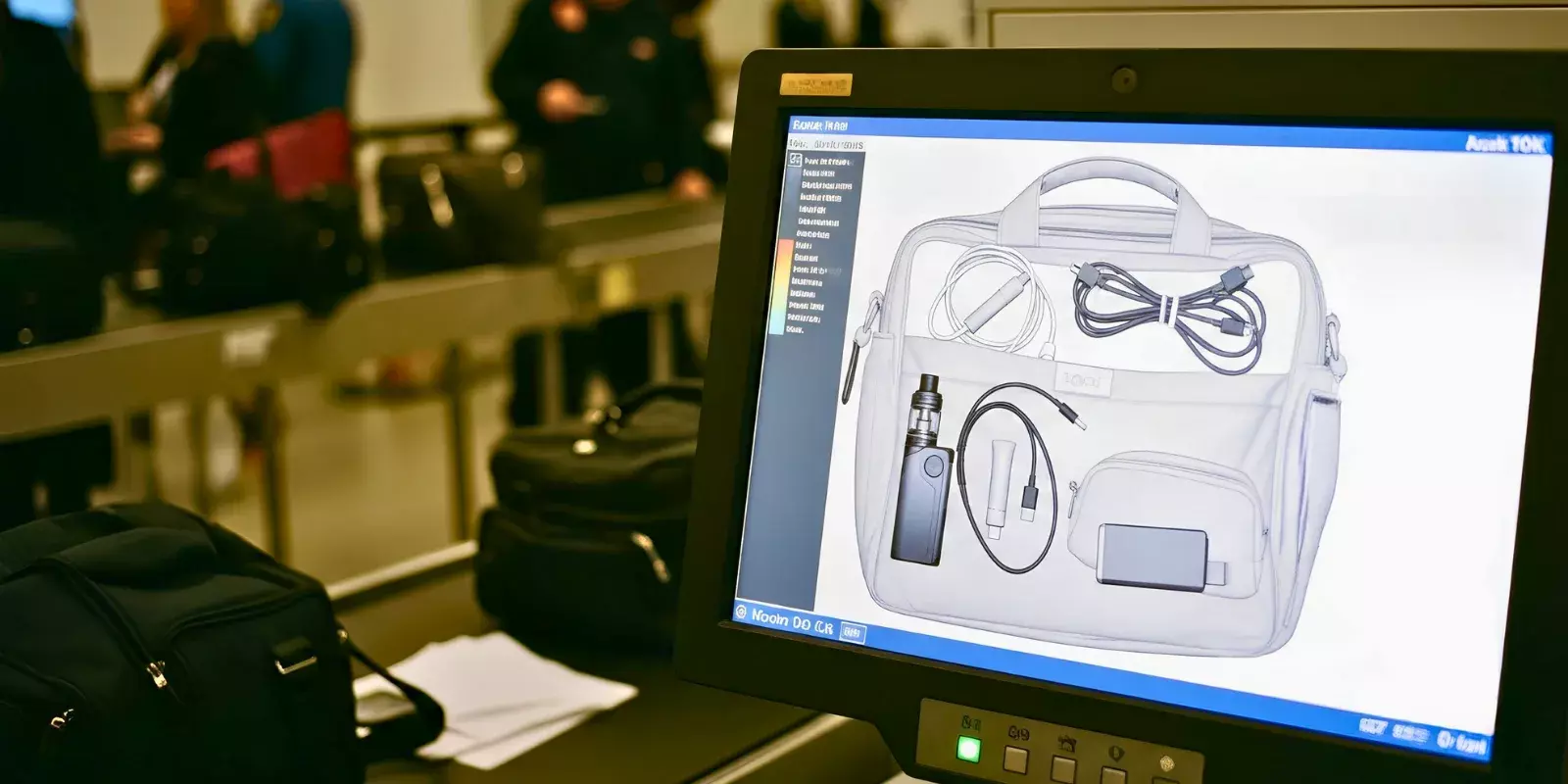
At the same time, there are X-ray machines specifically designed to scan carry-on bags. These machines operate independently of any metal detector. Rather than just signaling the presence of metal, as walk-throughs do, they generate images showing the shape and density of items inside luggage, which is why vapes tend to stand out during bag checks even if they don’t set off a metal-detection alarm.
What Happens If A Vape Is Detected?
The outcomes depend on where the device is spotted and how it was identified– different venues use various methods for screening that can lead to different results.
Where do detections most often occur?
At security checkpoints in places like airports, stadiums, and government buildings
Inside schools, hotels, workplaces, and even aircraft cabins.
How are vapes detected?
Metal detectors and X-ray scanners
These are commonly used at entry points to detect metal parts or to visually identify a vaping device when bags are screened.
Indoor air sensors:
These help to detect tiny vapor particles released into the air within enclosed spaces.
What usually follows detection?
Secondary screening of your belongings or a closer look at the item may take place.
You could be asked to put it somewhere else, or it might be held briefly.
In areas with particular rules, there could be disciplinary measures or fines.
Tips On How To Carry A Vape Through Security
Now that you have a clear answer to 'do metal detectors detect vapes?', it’s important to understand how to carry one through security. You must follow the rules for each location– they change a lot depending on where you are.
Airports
Carrying your vape should be done with proper caution. Official TSA guidelines for electronic cigarettes state that they should be in your carry-on luggage rather than in checked bags. Moreover, it is not just the TSA that has concerns about vapes on aeroplanes. The Federal Aviation Administration (FAA) says lithium-ion power batteries must remain in the cabin due to fire safety concerns.
Public Venues (Concerts, Stadiums, Events
It is important to be aware of venue policies before arrival, as some locations have total possession bans. Expect bag searches or metal detector screenings when entering– and if your device sets off an alert, staff members may ask you to do something with it, such as take it back to your car.
Schools and Institutional Settings
Given that most educational institutions prohibit students from carrying vaping devices on school grounds, breaking these rules may result in consequences beyond having the item taken away.
Workplaces and Hotels
It may be okay to carry your vape around indoors, but using it inside is often not allowed. To avoid breaking any rules, you should keep the device in your pocket or bag when in areas where vaping is banned– with any luck, this will help you steer clear of staff warnings, fines, or being asked to leave.
Final Thoughts
So, do metal detectors detect vapes? Yes. These gadgets almost always contain some metal component— and security systems are designed to pick up on such things.
What affects whether a particular item will cause an alert more than the object itself is where the screening takes place and how tight security is. Airports, schools, or controlled venues often have very different rules about vapes than you’ll find at hotels or office buildings.
Understanding these differences can help you avoid confusion, delays, or even accidentally breaking rules when going through security.
FAQs
1. Can metal detectors detect vapes?
Vapes consist of some metal parts. So yes, metal detectors can detect them.
2. Do disposable vapes set off metal detectors?
Yes. Security scanners will pick up any metallic components within the device, telling them there is a vape present. This works regardless of the size of the vape device.
3. Will a vape show up on airport security scanners?
Yes. Scanners at the airport are calibrated to catch even small metal objects. Vapes won't sneak through them undetected.
4. Are vape batteries the main reason they’re detected?
A key component responsible for many vapes being flagged by airport security staff is their lithium-ion battery– but there are other metal parts too. For example, coil, chassis, circuit board, and connection points.
5. Do handheld metal detector wands detect vapes?
Yes. Due to the close-range nature (proximity factor) of a handheld wand, it is much more likely to detect vapes.
6. Do school and event metal detectors detect vapes?
Yes, they do.
7. Can you actually avoid metal detection with a vape?
No. This is because all vapes contain some metal parts– something security scanners are very good at detecting. So, trying to hide your device to get past a security check is not only a bad idea, but could also mean it takes longer to get through, or the staff take it off you.
8. At venues using older scanners, do metal detectors detect vape as effectively?
No, older metal detectors just are not as good as newer, more sensitive detectors or scanners.