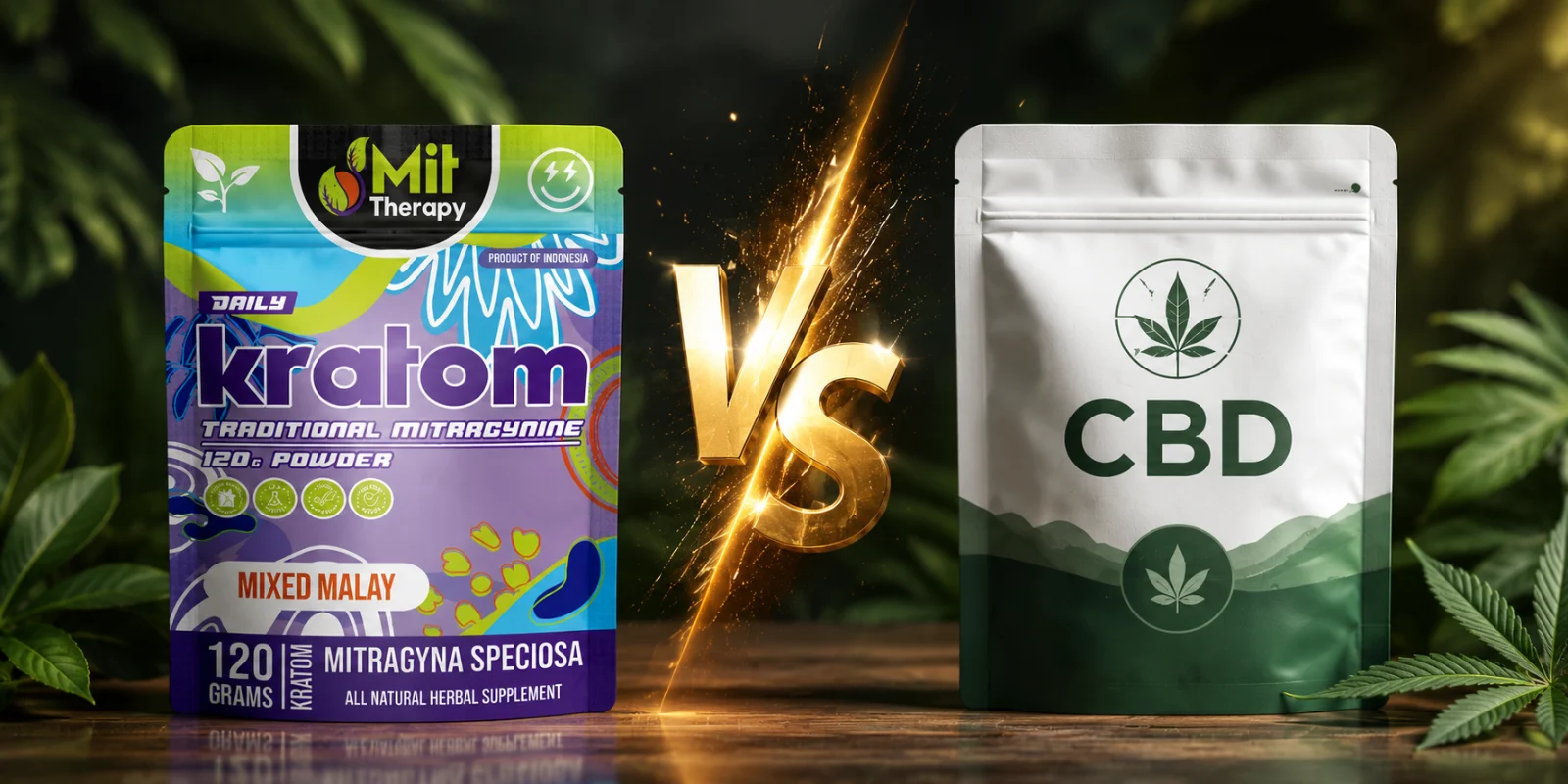
Kratom and CBD are both plant-derived substances, but they come from different botanical sources and contain entirely different active compounds. CBD, or cannabidiol, is a cannabinoid found in the cannabis plant. Kratom, scientifically known as Mitragyna speciosa, is a tropical tree whose leaves contain naturally occurring alkaloids, primarily Mitragynine.
These differences influence how each botanical is classified, processed, regulated, tested, and sold. In this Kratom vs CBD guide, we will examine their origins, composition, product formats, legal status, and labeling requirements to help readers understand how the two categories differ.
CBD vs Kratom: Quick Comparison
Feature | CBD (Cannabidiol) | Kratom (Mitragyna speciosa) |
Botanical source | Derived from hemp or other cannabis plants | Common name for the Southeast Asian evergreen tree Mitragyna speciosa |
Plant family | Cannabaceae | Rubiaceae |
Primary plant material | Commonly extracted from the flowers, leaves, and other aerial parts of hemp | Commonly produced from harvested Kratom leaves |
Main compound class | Cannabinoids | |
Biological pathways studied | Primarily studied in relation to the endocannabinoid system and other molecular pathways | Kratom alkaloids are studied for their interaction with several receptor systems |
Common product formats | Oils, tinctures, capsules, gummies, topicals, and isolates | Powder, capsules, tablets, liquid formulations, and extracts |
Label measurements | Often lists CBD or total cannabinoid content in milligrams | May list net botanical weight, Mitragynine content, or total alkaloid information |
Common laboratory testing | Cannabinoid profile, THC content, pesticides, heavy metals, microbes, and residual solvents | Alkaloid profile, microbial contaminants, heavy metals, residual solvents, and botanical identity |
Federal regulatory position | CBD regulations depend on the product type, formulation, claims, and intended use | Kratom is not FDA-approved as a dietary ingredient, food additive, or drug |
State-level treatment | Laws may vary based on THC content, product type, age restrictions, and local regulations | Legality, age limits, labeling rules, and product restrictions vary by jurisdiction |
What Is Kratom?
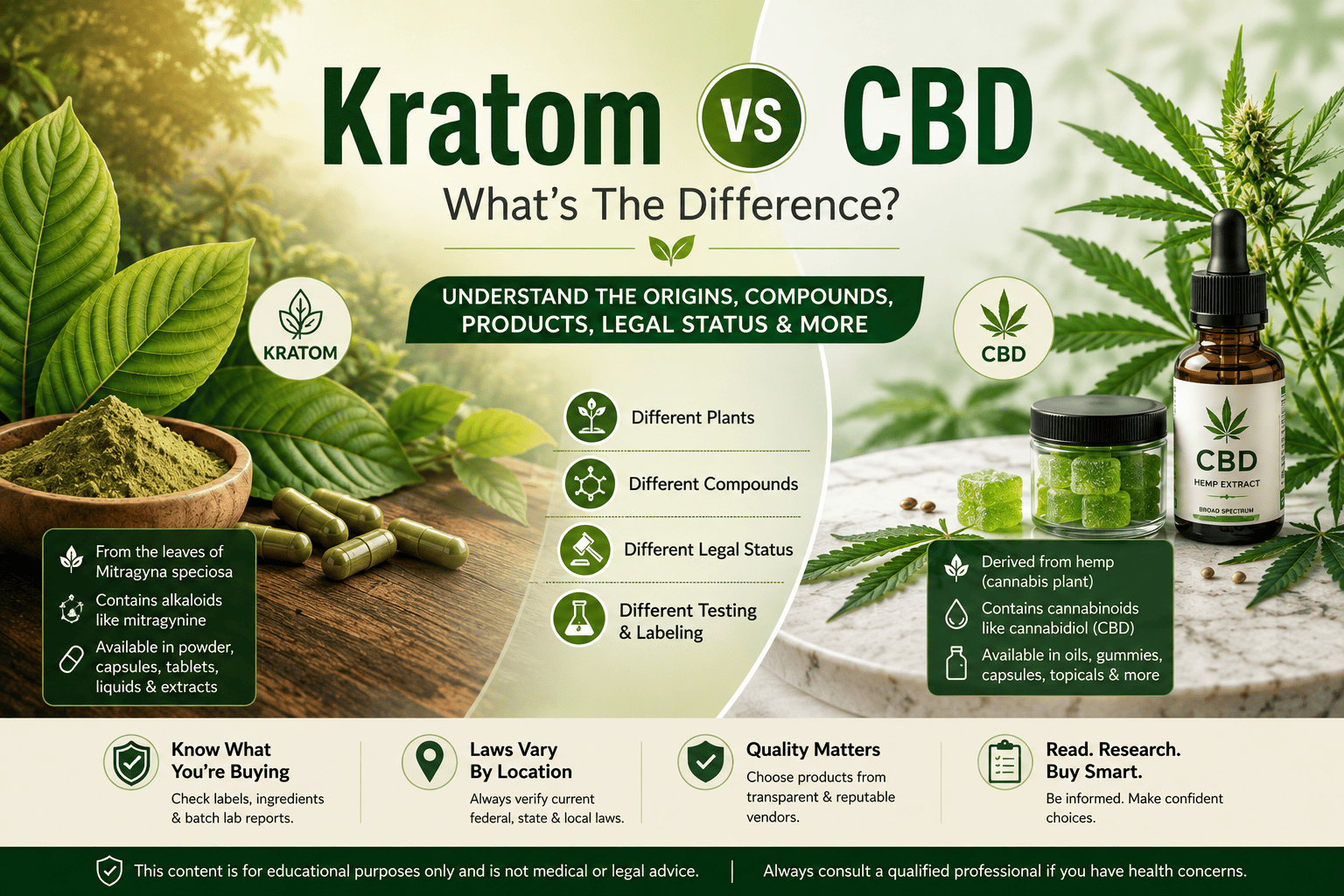
Kratom is the common name for Mitragyna speciosa, a tropical evergreen tree belonging to the Rubiaceae plant family. It grows naturally in parts of Southeast Asia, including Indonesia, Malaysia, Thailand, and Papua New Guinea.
The leaves of the Kratom tree contain naturally occurring alkaloids, with Mitragynine being the most prominent.
What Is CBD?
CBD, short for cannabidiol, is one of the naturally occurring cannabinoids found in the cannabis plant. Unlike tetrahydrocannabinol, or THC, CBD is generally described as non-intoxicating, meaning it does not produce the high commonly associated with THC.
CBD is often extracted from hemp, a legally defined type of cannabis containing no more than the permitted level of delta-9 THC.
Kratom vs CBD: Main Differences
Kratom and CBD differ in their origin, available formats, interaction with the body, and legal status.
Origin
Kratom: Native to Southeast Asia, including Indonesia, Malaysia, Thailand, and Papua New Guinea.
CBD: A cannabinoid found in cannabis plants, which have historical origins in Central and South Asia.
Formats They Are Sold In
Kratom products include:
CBD products include:
Oils
Capsules
Gummies
Topicals
Full-spectrum CBD
Broad-spectrum CBD
CBD isolate
How They Interact With The Body
Kratom
Kratom contains more than 40 identified alkaloids, with Mitragynine usually being the most abundant. Mitragynine and related Kratom alkaloids interact mainly with opioid receptors, especially the mu-opioid receptor. Research also shows activity involving adrenergic and serotonin receptors.
CBD
CBD is one of more than 100 cannabinoids found in cannabis. Unlike THC, it has low direct affinity for the CB1 and CB2 cannabinoid receptors. Instead, CBD works mainly through indirect and multi-target pathways involving the endocannabinoid system, TRPV1 channels, serotonin 5-HT1A receptors, and GPR55 receptors.
Legality
Kratom
Kratom is not federally banned in the United States, but it is restricted or prohibited in some states and local areas. Kratom products are also subject to different age, labeling, and product rules depending on the location.
CBD
Hemp-derived CBD containing no more than 0.3% delta-9 THC by dry weight is federally permitted under the 2018 Farm Bill. However, CBD rules can differ by state, product type, ingredients, and intended use.
Note: Always check the latest state and local regulations before buying either product.
CBD vs Kratom: Which Is Better?
Neither Kratom nor CBD is universally better. Since they come from different plants, contain different active compounds, and interact with the body through different pathways, the better choice depends on which product best matches the results you are seeking.
It also helps to consider factors such as product type, legal availability, ingredient transparency, and third-party testing. Because they are not interchangeable, buyers should compare labels, laboratory reports, and local regulations before choosing either product.
Frequently Asked Questions
1. Can CBD and Kratom appear in the same product?
Yes, some products may contain both, but their ingredients, labeling, and legal requirements can differ. Buyers should review the full ingredient list and batch-specific laboratory report.
2. Are Kratom and CBD Tested in the same way?
Not exactly. Kratom testing often focuses on alkaloids and contaminants, while CBD testing usually measures cannabinoids, THC levels, pesticides, solvents, microbes, and heavy metals.
3. Can Kratom or CBD products expire?
Yes. Product quality may change over time due to heat, moisture, air, light, or damaged packaging. Buyers should check the expiration date and storage instructions on the label.
4. Are Kratom and CBD Available in the same stores?
Sometimes. Some retailers sell both Kratom and CBD, but availability depends on state laws, store policies, age restrictions, and product type. A retailer that carries CBD may not also sell Kratom.
5. Kava vs Kratom vs CBD: How do they differ?
Kava, Kratom, and CBD come from different plants and contain different active compounds. Kava comes from the Piper methysticum plant and contains Kavalactones. Kratom is the common name for Mitragyna speciosa and contains alkaloids such as Mitragynine. CBD is a cannabinoid found in cannabis plants. They also differ in product formats, biological pathways, legal status, and labeling requirements.
Final Thoughts
As we wrap up this Kratom vs CBD guide, it is clear that the two differ in their plant source, active compounds, product formats, biological pathways, and legal status.
Whichever option you consider, review the product label, read online reviews, check batch-specific third-party laboratory reports, choose a transparent vendor, and confirm the latest local laws.
A well-informed choice begins with accurate product information and a clear understanding of how Kratom and CBD differ.
Related Reads:
Disclaimer: This content is for general informational purposes only and is not medical or legal advice. Kratom and CBD laws vary by location, so always check current local regulations and product labels.