
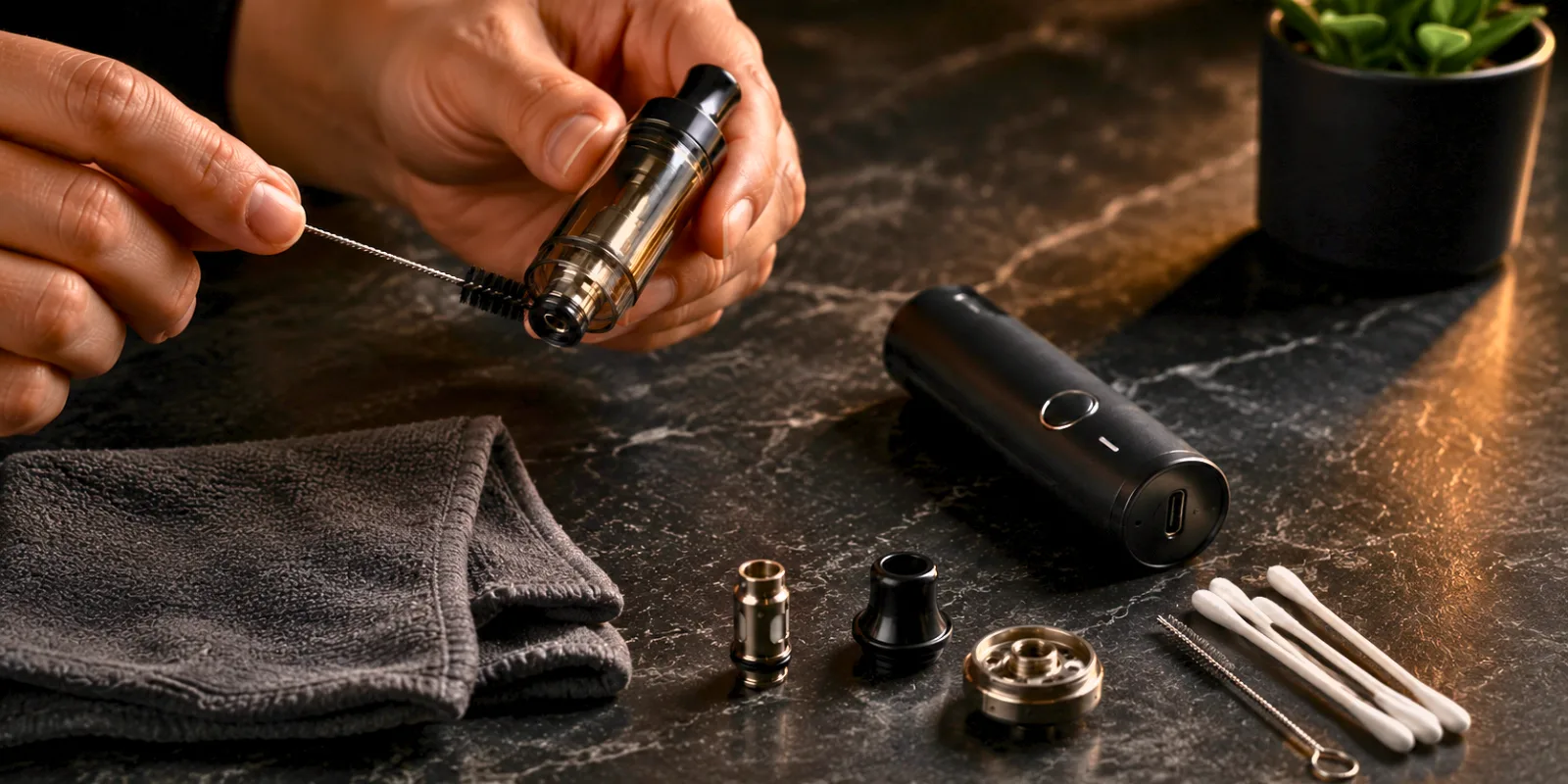
A nectar collector, often called a dab straw or honey straw, is a simple, portable tool for enjoying cannabis concentrates like wax, shatter, and rosin. Instead of using a full dab rig, you just heat the tip and gently touch it to your concentrate to create smooth, flavorful vapor.
In this guide, we’ll answer what a nectar collector is, how it works, how to use and clean it, what comes in a typical kit, and how to choose the right one for you.
Who Is This Guide For?
Dab rig users looking for a portable option
Those comparing different nectar collector types
People learning how to use and clean one
Anyone choosing their first nectar collector kit
What Is A Nectar Collector And How To Use It?
A nectar collector is a handheld device used to vaporize concentrates. It works by using a heated tip to turn concentrate into vapor. As the user draws through the mouthpiece, the vapor moves through the device’s airpath and may pass through water filtration before being inhaled.
Key Components
Heating Tip: The lower end that makes contact with the concentrate. It is commonly made from quartz, titanium, or ceramic.
Body or Water Chamber: The central section that carries the vapor. Some models include water filtration to help cool it.
Mouthpiece: The upper part used to draw vapor through the device.
Concentrate Dish: A heat-resistant glass, quartz, or silicone container used to hold the concentrate.
How Does The Heating Process Work?
Learning how to use a nectar collector is easy and can be broken down into four simple steps.:
Prepare the dish: Place a small amount of concentrate in a heat-resistant container.
Heat the tip: Apply heat evenly with a butane torch until the tip reaches the required temperature.
Allow brief cooling: Wait a few seconds so the tip is not excessively hot.
Make light contact: Draw gently through the mouthpiece while touching only the surface of the concentrate.
The heated tip vaporizes a small portion of the material. The vapor then enters the opening in the tip, travels through the body, and reaches the mouthpiece.
✍️ Note: Avoid pressing the tip deeply into the concentrate, as this may pull excess residue into the airpath and cause clogging.
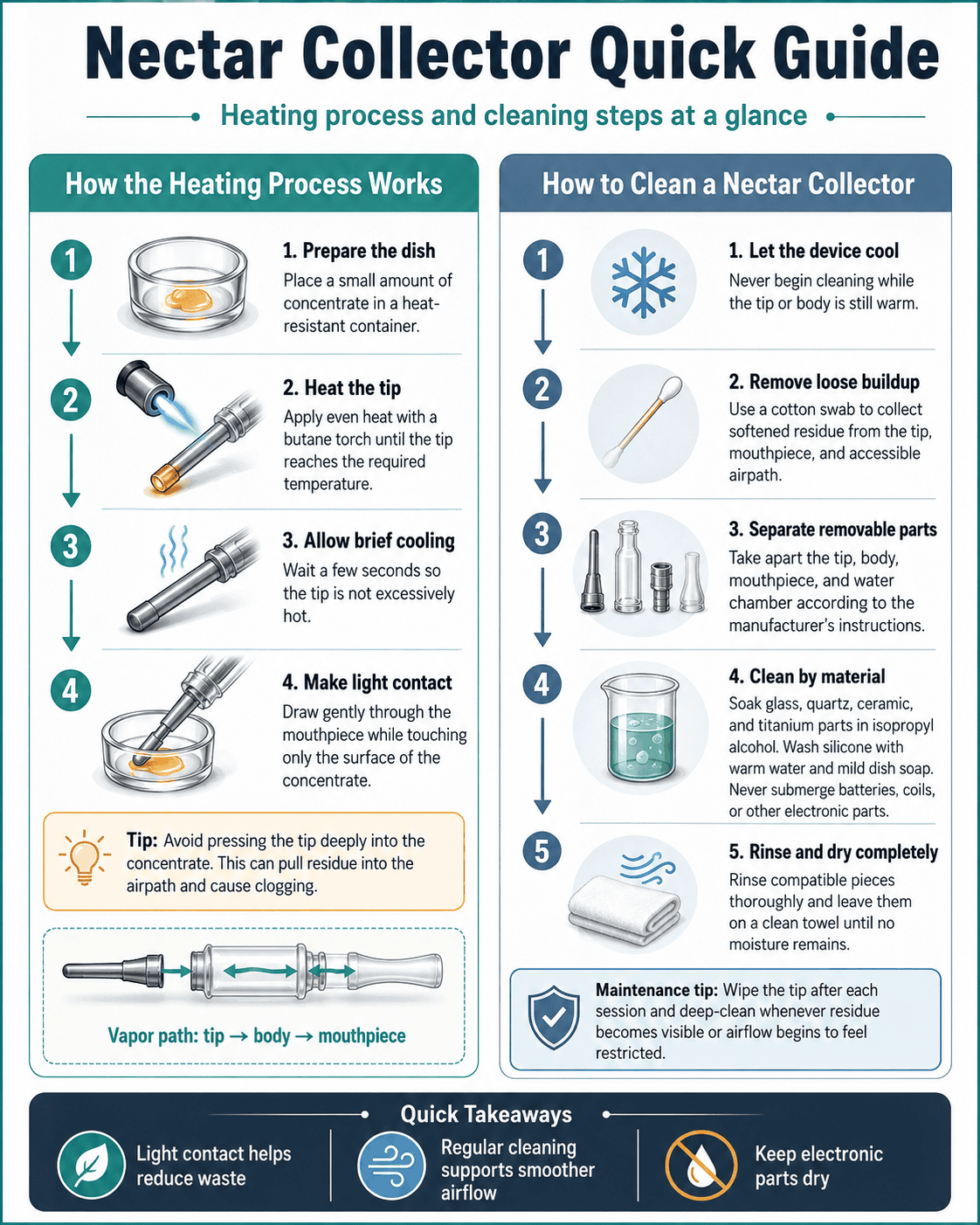
Did You Know? Nectar collectors are compact, easy to use, and can help reduce waste by vaporizing only the concentrate that the heated tip touches. |
What Are the Different Types Of Nectar Collectors?
Nectar collectors mainly differ in their heating systems and body materials. The most common options include:
Electric Nectar Collectors
Battery-powered models use a built-in coil, removing the need for a torch. Many offer adjustable heat settings for better temperature control.
Suitable for: Easy operation, portability, and consistent heating.
Glass Nectar Collectors
These models use borosilicate glass with a removable quartz, ceramic, or titanium tip. Some also feature a small water chamber.
Suitable for: Clean flavor, visible airflow, and water filtration.
Silicone Nectar Collectors
Silicone models combine a flexible, impact-resistant body with a heat-resistant removable tip.
Suitable for: Travel, outdoor use, and buyers concerned about breakage.
Wood Nectar Collectors
Wooden models feature a decorative outer body with a separate metal or glass airpath inside.
Suitable for: Users who value craftsmanship and a distinctive appearance.
The best type depends on whether you prioritize durability, flavor, portability, filtration, or torch-free heating.
How To Clean A Nectar Collector
Knowing how to clean a nectar collector helps prevent restricted airflow, burnt residue, and buildup after each nectar collector dab.
Let the device cool: Never begin cleaning while the tip or body is still warm.
Remove loose buildup: Use a cotton swab to collect softened residue from the tip, mouthpiece, and any accessible air path.
Separate removable parts: Take apart the tip, body, mouthpiece, and water chamber according to the manufacturer’s instructions.
Clean according to the material: Soak compatible glass, quartz, ceramic, and titanium parts in isopropyl alcohol. Wash silicone parts with warm water and mild dish soap. Never submerge batteries, coils, or other electronic components.
Rinse and dry completely: Rinse compatible pieces thoroughly and leave them on a clean towel until no moisture remains.
✍️ Maintenance tip: Wipe the tip after each session and perform a deeper cleaning whenever residue becomes visible or airflow begins to feel restricted.
How To Choose The Right Nectar Collector
The right nectar collector depends on where you plan to use it, how much temperature control you want, and which materials best match your handling and maintenance preferences.
1. Decide Between Manual and Electric Heating
Manual models: Use a butane torch to heat the tip. They offer direct control over the heating process but require careful temperature management and safe torch handling.
Electric models: Use a rechargeable battery and a built-in heating element. They remove the need for a torch and may include preset or adjustable temperature settings.
✍️ Note: Electric kits vary by model. TheLookah Giraffe Electric Nectar Collector Kit, for instance, includes the device, glass mouthpiece, quartz coil, magnetic cap, cleaning brush, and user manual.
2. Compare Body Designs
Glass: Provides a clear vapor path and does not add flavor. However, it requires careful handling because it can break.
Silicone: Flexible, impact-resistant, and better suited to travel or outdoor use. Many models include removable parts for easier cleaning.
Water-filtered: Uses a small chamber to cool and filter vapor. These models are usually larger and require more maintenance.
Dry straw: Features a simple tube without water filtration. It is compact and portable, although the vapor may feel warmer.
3. Choose the Tip Material
Quartz: Heats quickly and is commonly preferred for clean flavor, though it is more fragile than metal.
Titanium: Durable, fast-heating, and resistant to breakage. It also retains heat well but requires careful temperature control.
Ceramic: Heats more slowly and retains heat longer. It can provide even heating but may crack if dropped or exposed to sudden temperature changes.
4. Check the Tip Size
Common tip sizes include:
10 mm: Compact and suited to smaller devices
14 mm: The most widely used size for general-purpose models
18 mm: Offers a wider opening and increased airflow
Always confirm that the tip size matches the body or connector before purchasing replacement parts.
5. Review Practical Features
Other features worth checking include:
Battery life and charging method
Replacement tip or coil availability
Water capacity
Ease of disassembly
Included concentrate dish
Protective case or storage options
Manufacturer cleaning instructions
Frequently Asked Questions
1. How much water can I put in a nectar collector?
Add only enough water to cover the percolator openings. Take a test draw before attaching the heated tip; if water reaches the mouthpiece, pour some out. Dry nectar collectors do not require water.
2. What mistakes should first-time users avoid?
New users often heat the tip for too long, press it too deeply into the concentrate, or delay cleaning until airflow becomes restricted. Using light contact, controlled heat, and regular maintenance helps prevent waste and buildup.
3. Can nectar collectors waste wax?
They can waste wax if the tip is overheated, pushed too deeply into the concentrate, or used with strong airflow. Lightly touching the surface gives better control and helps prevent material from entering the airpath.
4. Can I use a propane torch for my nectar collector?
A propane torch can heat some manual nectar collector tips, but it burns hotter and is harder to control than butane. A small adjustable butane torch is generally the better option unless the manufacturer specifically approves propane.
5. Why does an electric nectar collector blink yellow?
The meaning depends on the model. Yellow blinking may signal overheating, a short circuit, an incorrectly connected coil, or another protection warning. Stop using the device, let it cool, inspect the coil connection, and check its manual.
6. Why is my nectar collector clogged?
Clogs form when concentrate is drawn into the tip and cools inside the airpath. Using a gentler draw, touching only the surface of the concentrate, and cleaning visible residue regularly can reduce buildup.
7. Do all nectar collectors need a torch?
No. Traditional models require a torch-heated tip, while electric nectar collectors use a battery-powered coil. Electric options are useful for those who prefer torch-free heating and preset temperature control.
8. Are nectar collectors beginner-friendly?
Yes. Their compact design and direct heating method make them relatively easy to understand. Electric models can be especially approachable because they remove the need for a torch and offer more consistent temperature control.
Final Thoughts
A nectar collector is a simple, portable option for anyone who wants a more direct way to enjoy concentrates without setting up a full dab rig. From durable silicone models to sleek glass designs and convenient electric options, there is a style for almost every preference. Once you understand the heating method, tip material, cleaning needs, and overall build, choosing the right model becomes much easier.
Disclaimer: This guide is for educational purposes only and is intended for adults of legal age. Follow local cannabis laws and manufacturer instructions. Handle hot tips, torches, and electronic parts carefully, and keep all products away from children and pets.