
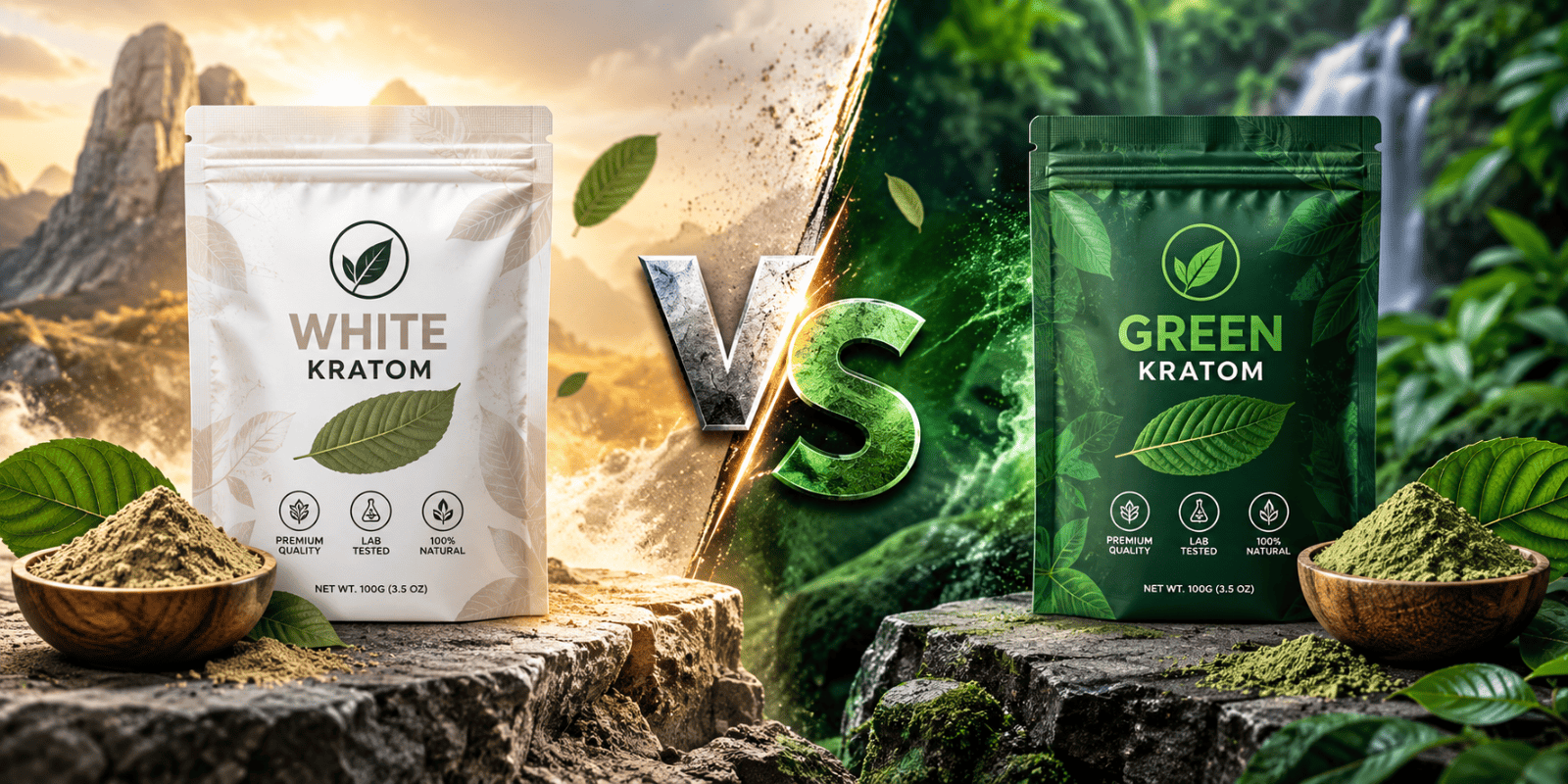
 Searching for detailed information to settle the White vs Green Kratom debate? You’ve come to the right place.
White and Green Kratom are both varieties of Mitragyna speciosa. However, they can differ in leaf maturity, processing methods, and alkaloid profiles, which is why people often compare them.
In this White Kratom vs Green Kratom guide, we’ll break down the key differences between them, including their processing methods, formats, and alkaloid profiles, so you can better understand how they compare.
Green vs White Kratom: Quick Comparison
Feature | White Kratom | Green Kratom |
Botanical Source | Mitragyna speciosa | Mitragyna speciosa |
Leaf Maturity | Younger leaves | Middle-aged leaves |
Color | White or pale green | Light or muted green |
Alkaloid Composition | Mild | Balanced |
Popular Formats | ||
Popular Options |
Table Of Contents:
What Is White Kratom?
What Is Green Kratom?
White vs Green Kratom: Which One Should You Choose?
Frequently Asked Questions
Final Thoughts
What Is White Kratom?
White vein Kratom is made from young Kratom leaves sourced from the lush jungles of Southeast Asia. After careful harvesting, farmers dry the leaves in open air under controlled conditions. The dried leaves are then finely milled into a powder, creating one of the traditional forms of White Kratom available today.
Best For: Often described as a popular daytime variety.
What Is Green Kratom?
Green Vein Kratom is formulated using middle-aged leaves of Mitragyna speciosa, a tropical tree native to Southeast Asian countries, including Indonesia, Malaysia, Vietnam, and Thailand.
Once harvested, these leaves are dried indoors with little to no light. This helps achieve a balanced alkaloid composition before the leaves are milled into a fine powder.
Best For: Traditionally associated with both daytime and nighttime use.
White vs Green Kratom: Which One Should You Choose?
If you’re wondering which one is right for you, it depends on understanding the differences between the two and your own preferences. Here’s what you need to know.
What Are The Differences?
Alkaloid Profile
Alkaloid | White Kratom | Green Kratom |
Total Alkaloid Content | 0.5%–1.5% of dry leaf weight | 1.0%–2.0% of dry leaf weight |
Mitragynine | Up to 66% of total alkaloid fraction | 55%–66% of total alkaloid fraction |
Paynantheine | 8.5%–10% | 9%–15% |
Speciogynine | 6.5%–7% | 6.5%–7% |
Speciociliatine | 0.8%–1% | 0.8%–2% |
Minor Alkaloids | Each <1%, present in trace amounts | Each <1%, present in trace amounts |
Note: Alkaloid composition can vary based on factors such as leaf maturity, growing region, harvesting conditions, and processing methods. The percentages above represent reported ranges, not fixed values.
💡 Fun Fact: Some Green Kratom products can have a different alkaloid composition even when they share the word ‘Green’ in their name. That’s because certain varieties are vendor-created blends or marketing terms, rather than standardized botanical strains. Leaf sources, blend ratios, and processing methods can all influence their final composition. Want to explore some of these unique Green varieties? Check out: |
Appearance
White Kratom: Typically appears pale, dull green, beige, or light tan. Its color is linked to its drying process, which may involve open-air drying in humid conditions followed by extended exposure to direct sunlight. These conditions can reduce the green chlorophyll pigment in the leaves.
Green Kratom: Typically has a green to deep olive-green appearance. It is generally dried with limited direct sunlight, which helps retain more of the leaf’s natural green color.
Note: Color can vary depending on leaf maturity, drying conditions, and processing methods.
Potency Levels
White Kratom: Often described as having a mild to moderate profile and is commonly marketed as a more approachable option for those new to Kratom.
Green Kratom: Generally described as having a balanced profile and is commonly marketed toward both beginners and experienced Kratom enthusiasts.
Frequently Asked Questions
1. Can two Green Kratom products have different alkaloid profiles?
Yes. Alkaloid composition can vary between products based on leaf source, maturity, processing, and whether a product is a vendor-created blend or marketing category.
2. Does the color of Kratom determine its alkaloid content?
No. The color of Kratom does not reliably determine its alkaloid content. Vein color is only one classification factor.
3. How should White or Green Kratom be stored?
Store Kratom in a cool, dry place away from direct sunlight and moisture. Keeping the product in a tightly sealed container can also help protect its quality during storage.
4. Where can you buy White or Green Kratom?
White and Green Kratom may be available through online retailers like Durity Distribution and physical specialty stores, depending on local regulations. Availability can vary by location.
5. Is there a legal age to buy Green Vein Kratom?
The minimum age to buy Kratom is 18 or 21, depending on the state or local jurisdiction. Some areas also restrict Kratom entirely, so check your local laws before purchasing.
6. Can White Kratom expire?
Yes, White Kratom can lose quality over time, particularly if exposed to moisture, heat, air, or direct sunlight. Check the product's expiration or best-by date and follow the manufacturer's storage instructions.
Final Thoughts
As we wrap up this White vs Green Kratom guide, you now have the key information to understand how these two varieties compare. Keep in mind that Kratom can vary from person to person based on factors such as individual body chemistry and metabolism. When comparing the two, consider their labeling, processing details, ingredients, and third-party lab reports rather than relying on color alone.
Related Reads:
Disclaimer: This article is for informational and educational purposes only and is not intended to provide medical advice or recommendations. Kratom laws and regulations vary by location and may change over time. Always check your local laws and consult a qualified healthcare professional if you have questions about Kratom or its potential risks.