
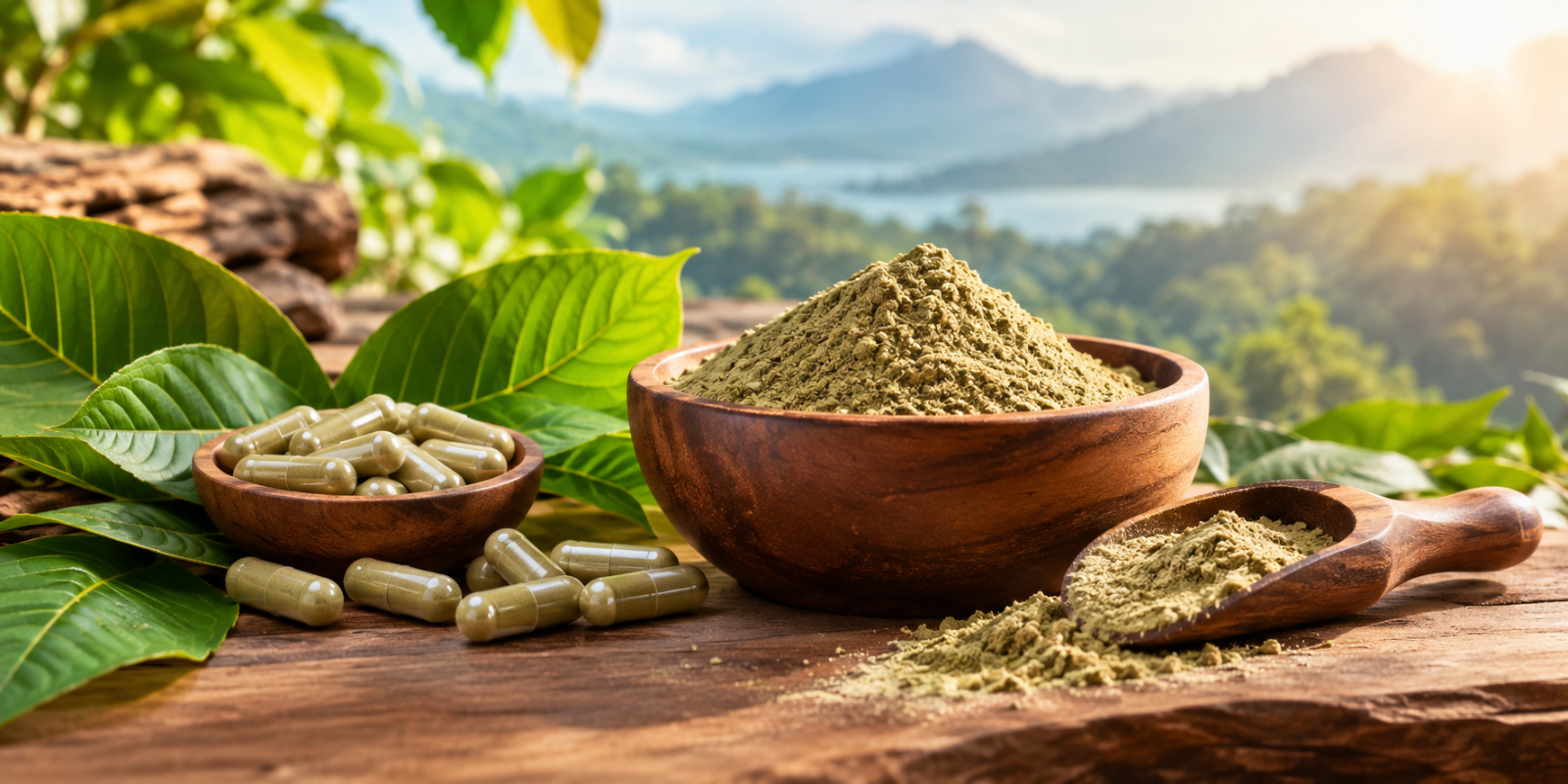
 White Gold Kratom is a proprietary blend or specially processed Kratom variety, commonly created by combining white and yellow vein varieties. Unlike traditional red, green, or white Kratom, it is not a naturally occurring leaf vein color of the Mitragyna speciosa tree.
So, what exactly makes it different? In this White Gold Kratom review, we’ll cover the key details about this strain, including how it is typically made, its alkaloid profile, and available formats. We will also be covering what to look for when choosing the best White Gold Kratom.
Quick Overview:
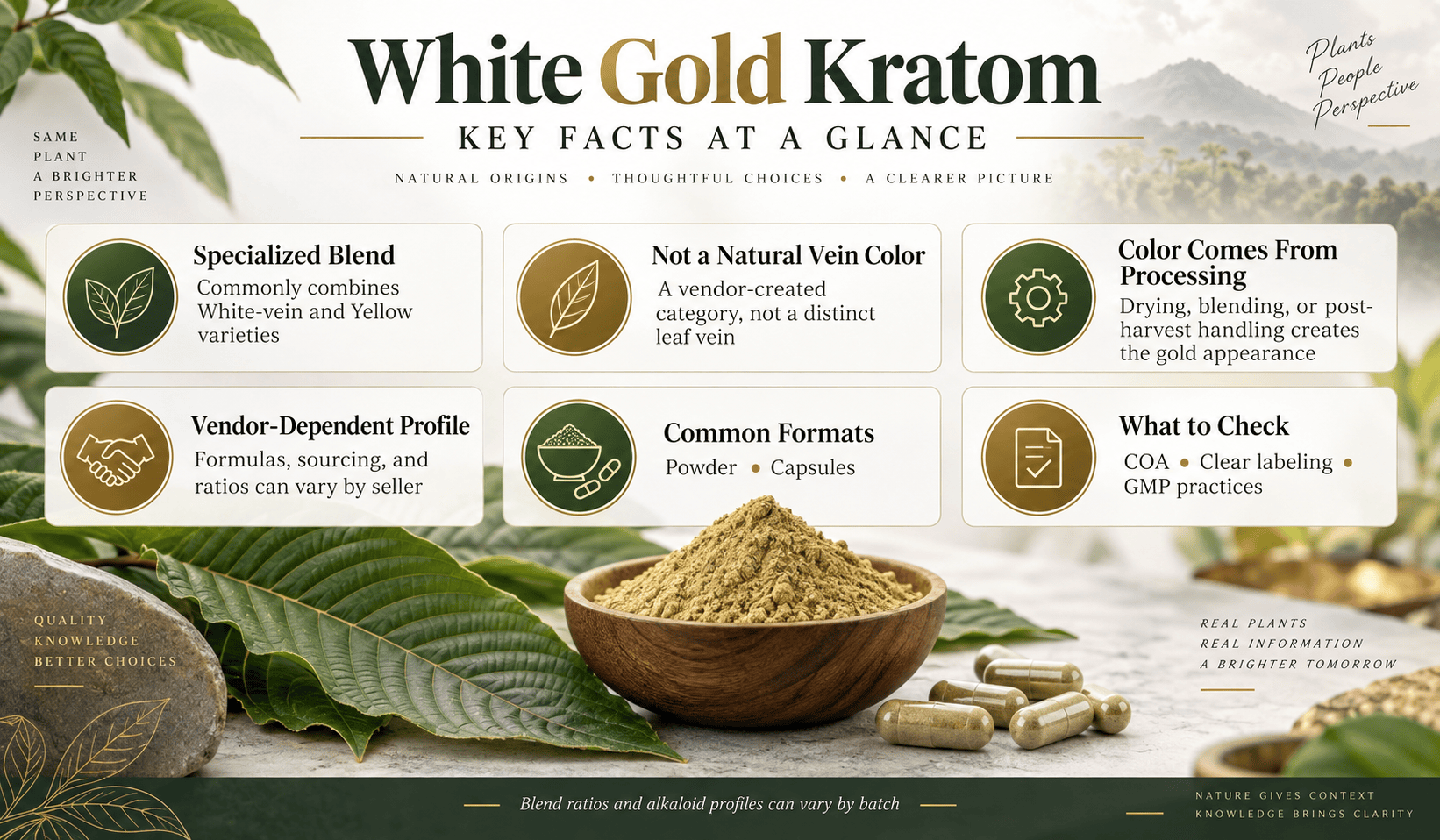
Hybrid blend: Commonly combines White-vein Kratom with yellow varieties.
Not a fixed strain: There is no standardized formula for White Gold Kratom.
Color: The ‘gold’ appearance usually comes from processing, drying, or blending rather than a naturally occurring gold vein.
Vendor-dependent profile: The final blend can vary based on sourcing, processing, and formulation.
Table Of Contents:
What Is White Gold Kratom?
So, How Is White Gold Kratom Typically Made?
What Is The Alkaloid Profile Of White Gold Kratom?
How Is White Gold Different From Other Gold Varieties?
White Gold vs Popular White Vein Varieties
Tips To Pick The Best White Gold Kratom
Frequently Asked Questions
What Is White Gold Kratom?
White Gold Kratom is best understood as a vendor-created Kratom category rather than a botanical strain classification. The name generally refers to blends that combine characteristics of White Kratom with Yellow Kratom.
Since there is no industry-wide recipe for White Gold Kratom, vendors may use different leaf sources, blend ratios, drying methods, or processing techniques. This is why the ingredient profile and appearance of one White Gold product may differ from another.
✍️ Also read: Gold Kratom vs Red Kratom: Which Is Better?
So, How Is White Gold Kratom Typically Made?
Here’s a step-by-step look at how White Gold Kratom is commonly produced:
Step 1: Harvesting the Raw Leaves
Farmers harvest fresh leaves from the Mitragyna speciosa tree.
For the White Vein base: Farmers typically select younger leaves, which are later processed using methods associated with White Kratom.
For the Yellow base: Middle-aged leaves, often associated with yellow or green varieties, are selected and then undergo additional post-harvest processing.
Step 2: Processing White Vein Kratom
White-vein leaves generally undergo controlled drying with limited oxidation.
Indoor drying: Leaves are dried indoors on racks with limited light for around 2–3 days.
Brief sun exposure: Some processors finish the drying stage with a short period of direct sunlight before milling.
Step 3: Processing Yellow Kratom
Yellow is generally associated with specialized post-harvest processing rather than a naturally occurring vein color.
For the White Vein base: Farmers typically select younger leaves, which are later processed using methods associated with White Kratom.
For the Yellow base: Middle-aged leaves, often associated with yellow or green varieties, are selected and then undergo additional post-harvest processing.
Step 4: Milling and Grinding
Once fully dried, both batches move to the milling stage.
De-veining: Thick stems and central veins are removed before grinding.
Pulverization: The dried leaf material is milled into a fine powder, leaving separate batches of White Kratom and Yellow Kratom powder ready for blending.
Step 5: Master Blending — Creating White Gold Kratom
The final step is combining the processed powders into the finished White Gold blend.
Ratio mixing: Formulas vary by vendor, but some White Gold blends may use ratios such as 50:50 or 60:40 White-to-Yellow Kratom.
Industrial blending: Commercial equipment, such as ribbon blenders, distributes the powders evenly throughout the batch.
Packaging: The finished blend is sold as White Gold Kratom powder or filled into White Gold Kratom Capsules for retail distribution.
What Is The Alkaloid Profile Of White Gold Kratom?
White Gold Kratom contains the same core alkaloids naturally found in Mitragyna speciosa, but the exact profile can vary depending on the White and Yellow Kratom used in the blend, their origin, processing method, and final formulation.
Alkaloid | Typical Share of Total Kratom Alkaloids | Key Detail |
Mitragynine | About 65–67% | Usually the most abundant alkaloid in Kratom leaf and commercial leaf products. |
Paynantheine | About 8–9% | One of the major secondary alkaloids naturally present in Kratom. |
Speciogynine | About 6–7% | Another commonly identified secondary alkaloid in the leaf. |
Speciociliatine | Around 1% or more, depending on the sample | Concentrations can differ substantially among commercial products and extracts. |
Note: These figures are useful as a general Kratom reference rather than a guaranteed White Gold formula. Laboratory analysis of commercial products has shown substantial variation in alkaloid concentrations, so a batch-specific COA is the best way to verify the profile of a particular White Gold Kratom product.
How Is White Gold Different From Other Gold Varieties?
White Gold differs from Green Gold and Red Gold mainly in the base vein color, leaf maturity, blend composition, and overall product profile.
Gold Variety | Leaf Maturity | Vein Classification | Typical Blend May Include | Profile |
Middle-aged leaves | Green | 60%–70% Green Vein + 30%–40% Gold/processed material | Balanced profile | |
Mature leaves | Red | 50%–70% Red Vein + 30%–50% Gold/processed material | Fuller, deeper, and more robust profile | |
White Gold | Young leaves | White | 70%–80% White Vein + 20%–30% Yellow/processed material | Mild and lighter profile |
Note: These blend ratios are examples rather than standardized formulas. Actual White Gold, Green Gold, and Red Gold formulations can vary by vendor and processing method.
White Gold vs Popular White Vein Varieties
White Gold Kratom differs from traditional White varieties because it is generally a vendor-created blend or processed formulation rather than a single regional variety. Here’s how it compares with several commonly available White Kratom options:
Variety | Region / Classification | Relative Mitragynine Profile | Harvest / Processing Characteristics | Availability | Common Product Formats |
White Gold Kratom | Vendor-created White + Gold/Yellow blend | Varies by formulation | Typically combines White Kratom with Yellow processed material | Vendor -dependent | Powder, capsules |
Kalimantan, Borneo | Mild to moderate | Commonly associated with younger, White-classified leaves | Widely available | Powder, capsules, extracts | |
Borneo | Mild to moderate | Typically produced from White-classified leaf material using lighter drying methods | Widely available | Powder, capsules, extracts | |
White Maeng Da | Traditionally associated with Thailand; now commonly sourced from Southeast Asia | Often marketed with a comparatively higher Mitragynine profile | A vendor-specific blend | Widely available | Powder, capsules, extracts |
Traditionally Thailand; now also sourced from other parts of Southeast Asia | Mild to moderate | Generally associated with younger White-classified leaves | Widely available | Powder, capsules, extracts |
✍️ Also read:
White vs Green Kratom: Which Strain Is Right For You?
White Kratom vs Red Kratom: What's the Difference?
Tips To Pick The Best White Gold Kratom
Here are a few simple steps to follow when looking for high-quality White Gold Kratom:
Check batch-specific lab reports: Look for recent COAs that verify alkaloid content and screen for contaminants.
Review the ingredient label: Confirm whether the product is a true White Gold blend and whether any extracts or added ingredients are included.
Compare vendor formulas: White Gold Kratom is not standardized, so blend ratios and processing methods can differ between sellers.
Look for clear sourcing details: Reputable vendors should provide information about origin, processing, and manufacturing practices.
Choose the right format: Compare White Gold Kratom powder and capsules based on convenience, packaging, and preference.
Check freshness and packaging: Airtight, properly sealed packaging helps protect the product from moisture, heat, and light.
💡 Found this White Gold Kratom guide useful? Read more such insightful articles on Durity Distribution’s Blog page.
Frequently Asked Questions
1. Is White Gold Kratom powder bitter?
Yes. White Gold Kratom powder typically has Kratom’s naturally earthy, herbal, and bitter taste because it is made from processed Mitragyna speciosa leaf material.
2. Are White Gold Kratom capsules stronger than powder?
No. White Gold Kratom capsules usually contain the same powder in an encapsulated form, so the format itself does not make them stronger.
3. Are all White Gold Kratom products made following GMP guidelines?
No. Manufacturing standards vary by vendor. Look for GMP compliance, batch-specific lab testing, clear labeling, and recognized quality programs such as the AKA GMP Standards Program.
4. Do I need to show proof of age when buying White Gold Kratom?
Yes. You may be required to verify your age with a valid government-issued ID when buying White Gold Kratom online or in-store, depending on local laws and vendor requirements.
5. Is White Gold Kratom good for beginners?
Yes, beginners may choose White Gold Kratom, but extra caution is important. Because it is a vendor-specific blend rather than a standardized strain, its alkaloid profile can vary between products and batches.
6. Can I buy White Gold Kratom in bulk?
Yes. You can buy White Gold Kratom in bulk from reputable wholesalers, including Durity Distribution. We offer fast shipping, competitive wholesale margins, and a $500 minimum order quantity (MOQ).
🛍️ Planning to place an order? Learn about our:
Disclaimer: This article is for educational purposes only and is not intended as medical, legal, or professional advice. White Gold Kratom formulations, alkaloid profiles, and labeling can vary by vendor and batch. Always review current local laws, product labels, and third-party lab reports before purchasing.