
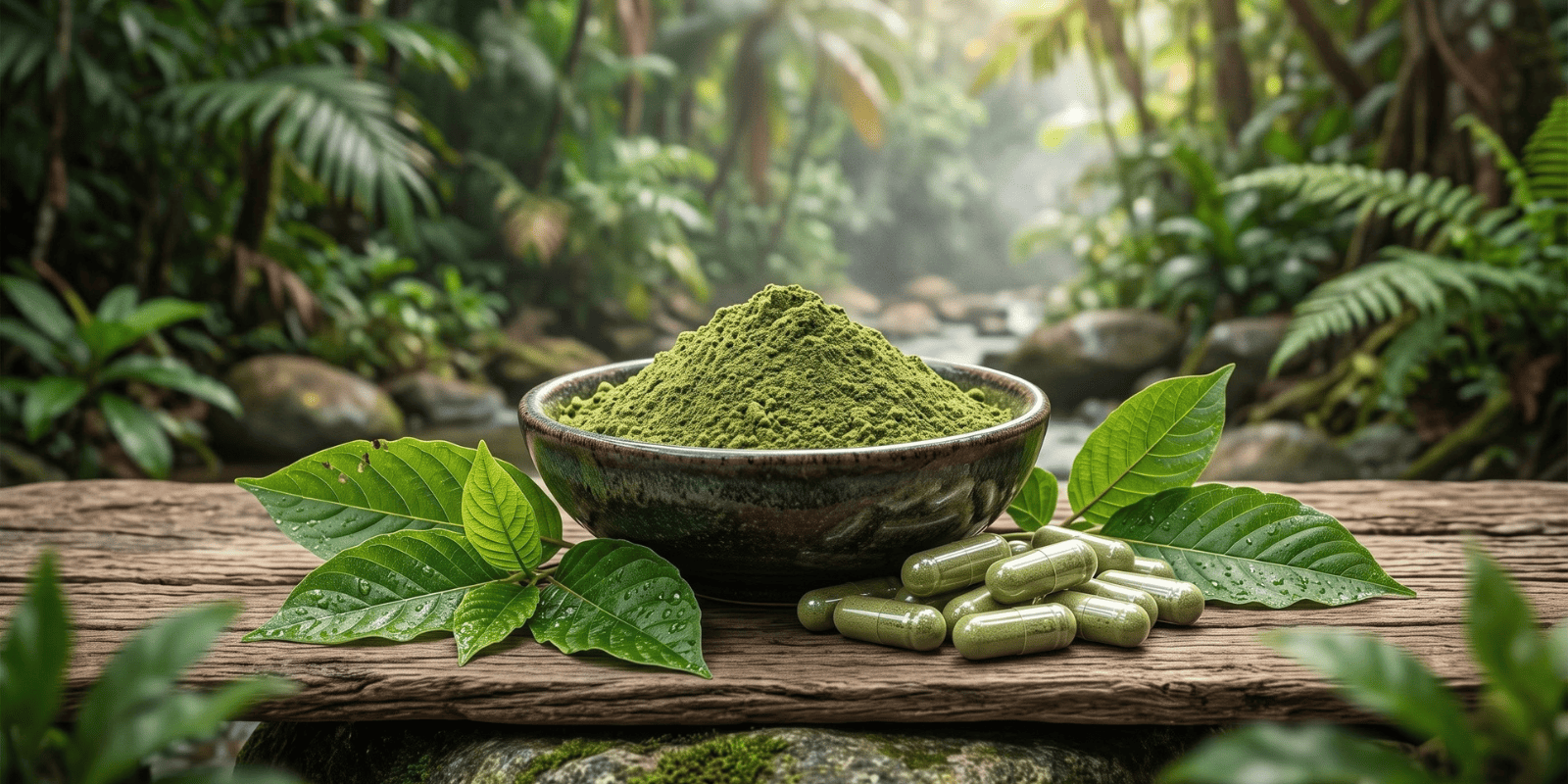
 White Kapuas Kratom comes from Mitragyna speciosa trees grown near Indonesia’s Kapuas River in Borneo. The region’s tropical climate, high humidity, and mineral-rich soil create favorable growing conditions for Kratom and help shape the characteristics of plants cultivated there.
Its more specific regional origin is also one reason White Kapuas, a.k.a. White Hulu Kapuas, is less commonly available, helping set it apart from more widely sold white-vein options.
In this White Kapuas Kratom guide, we’ll cover its alkaloid profile, available formats, what makes it unique, and what to look for when choosing a quality product.
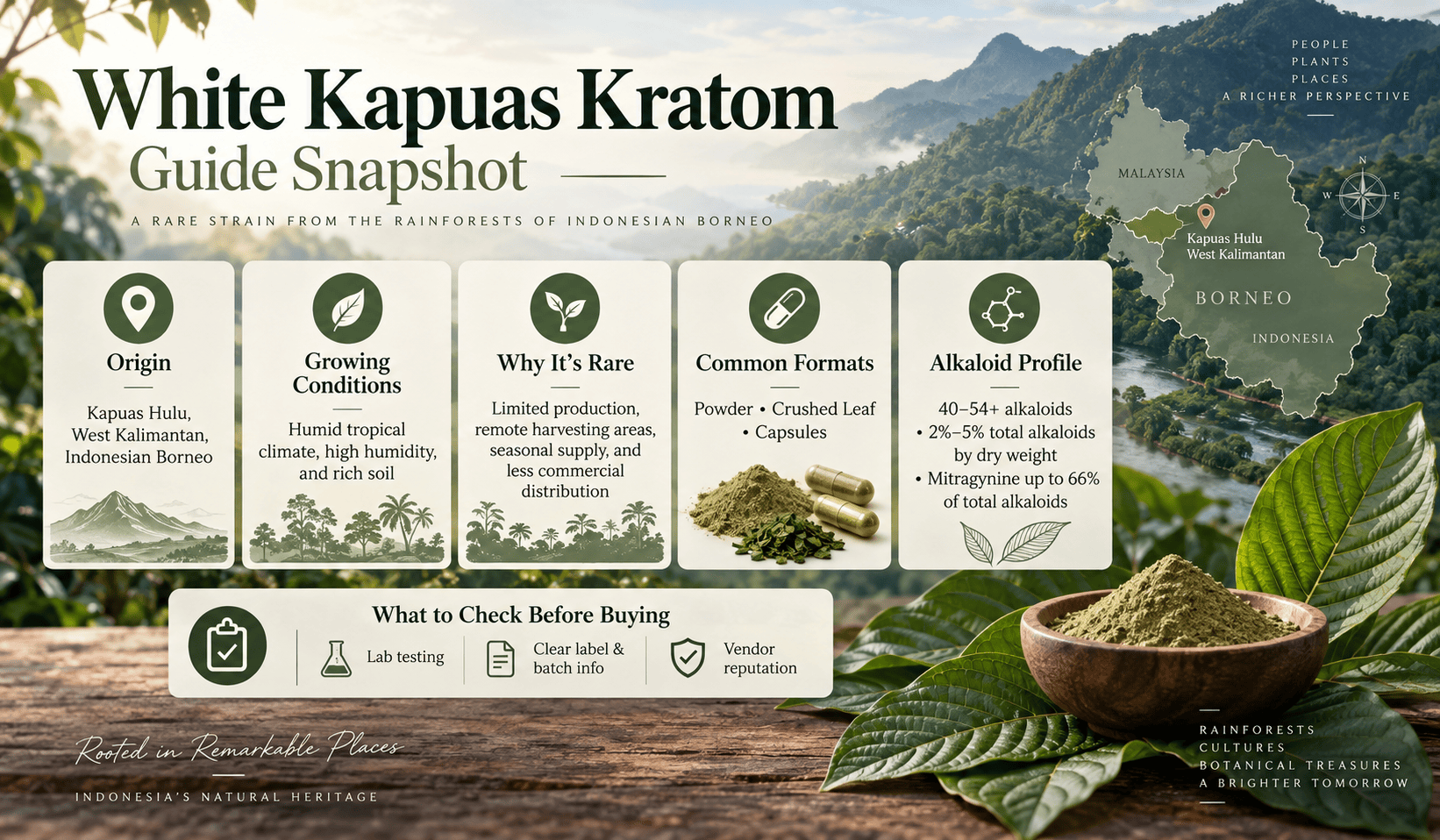
White Kapuas Hulu Kratom: Origin
Island: Borneo
Country: Indonesia
Province: West Kalimantan
Region:Kapuas Hulu
Growing Area: Upper Kapuas River region
Environment: Humid tropical climate and rich soil
Table Of Contents:
What Is White Kapuas Kratom And How Is It Made?
Why Is White Kapuas Kratom Rare?
What Is The Alkaloid Composition Of This Kratom Strain?
White Kapuas Kratom: What Are The Available Formats?
White Kapuas vs Other White Kratom Varieties
How To Choose The Best White Kapuas Kratom
Frequently Asked Questions
What Is White Kapuas Kratom And How Is It Made?
White Kapuas Kratom is a regional Kratom variety associated with the Kapuas Hulu area of West Kalimantan, Indonesian Borneo. Wondering how White Kapuas Kratom is made?
Here’s the process from leaf to powder:
Harvesting: Younger Kratom leaves are collected from Mitragyna speciosa trees grown in the Kapuas region.
Drying: The leaves are dried indoors under controlled conditions. The drying method can influence the final color and alkaloid profile.
Grinding: Once fully dried, the leaves become brittle and are mechanically ground into afine, uniform powder.
Packaging: Processors or vendors test, package, and prepare the finished powder for sale.
Why Is White Kapuas Kratom Rare?
White Kapuas is less commonly available than more mainstream white varieties because:
Limited Production: It is produced in smaller quantities than widely sold varieties such as White Maeng Da.
Remote Harvesting Areas: Some growing locations are difficult to access, complicating harvesting and transportation.
Seasonal Supply: Harvest timing, rainfall, and changing growing conditions can affect the availability of White Kapuas throughout the year.
Less Commercial Distribution: Fewer vendors consistently stock White Kapuas compared with more established Kratom varieties.
What Is The Alkaloid Composition Of This Kratom Strain?
White Kapuas Kratom contains a complex mix of more than 40–54 indole and oxindole alkaloids. Raw Kratom leaf typically contains about 2%–5% total alkaloids by dry weight, with Mitragynine making up the largest share.
Alkaloid | Typical Amount | Key Detail |
Mitragynine | Up to 66% of total alkaloids | Roughly 1%–2% of total dry leaf mass |
Paynantheine + Speciogynine | About 16% combined | Among the next most prominent indole alkaloids |
Other Alkaloids | Remaining fraction | Part of the broader 40–54+ alkaloid profile |
Total Alkaloids | About 2%–5% of dry weight | Can vary by leaf material and processing |
White Kapuas Kratom: What Are The Available Formats?
White Kapuas Kratom is commonly available in a few simple formats:
Powder: Finely ground dried leaf; the most traditional and economical option.
Crushed Leaf: Coarsely cut dried leaves, typically used for traditional brewing.
Capsules: Pre-measured, portable, and convenient for those who prefer a no-mess format.
White Kapuas vs Other White Kratom Varieties
White Kapuas stands out primarily for its more specific regional association with the Kapuas River area, whereas several other white varieties use broader geographic names.
White Kratom Variety | Origin | Growing Environment | Key Distinction |
White Kapuas | Kapuas Hulu, West Kalimantan | River-adjacent tropical rainforest | More geographically specific and closely associated with the Kapuas River region |
White Vietnam | Vietnam | Riverside and tropical forest areas | Linked to a different regional and river environment |
Kalimantan, Indonesia | Tropical forest regions | Broadly associated with Kalimantan rather than one specific river area | |
White Indo | Indonesia | Varies by island and region | Broad Indonesian category rather than a single growing region |
White Malay | Malaysia | Tropical lowland and upland forests | Associated with Malaysian growing regions and varied elevations |
White Borneo | Borneo | Mixed tropical forest environments | Broader Borneo designation covering a wider geographic area |
💡 Want to explore other popular white-vein varieties? Check out:
How To Choose The Best White Kapuas Kratom
Not all White Kapuas Kratom products are the same, and comparing options can get confusing. As we wrap up this White Kapuas Hulu Kratom guide, here are a few things to check before choosing one:
Check the Label: Look for clear product identity, net weight, ingredient details, and batch information.
Look for Lab Testing: Prefer products with batch-specific third-party testing for alkaloids and contaminants.
Compare Formats: Decide whether powder, capsules, or crushed leaf best fits your preference.
Compare Prices: Check the price per ounce or gram instead of only the package price.
Browse Online Forums: Communities such as Reddit and Kratom forums can help reveal recurring buyer experiences, but treat individual claims as anecdotal.
Check Vendor Reputation: Look at how long the seller has operated, its transparency, return policies, and contact information.
💡 Note: Always confirm that Kratom is legal to purchase and possess in your state or local area before buying.
Frequently Asked Questions
1. Where can I find White Kapuas Kratom near me?
You can check local botanical retailers and specialty Kratom shops, but verify local laws and look for clear labeling and third-party lab testing before purchasing.
2. What does White Kapuas Kratom taste like?
White Kapuas Kratom typically has the earthy, bitter, and herbal taste associated with raw Kratom leaf powder. Flavor can vary slightly between batches and processing methods.
3. Can you buy White Kapuas Kratom online?
Yes, you can buy White Kapuas Kratom from a reliable online vendor, including Durity Distribution, where legally permitted.
4. Is White Kapuas the same as White Kapuas Hulu Kratom?
Vendors often use the names interchangeably. ‘Hulu’ generally refers to the Kapuas Hulu region, although Kratom strain names are not formally standardized.
5. How should White Kapuas Kratom be stored?
Keep it in an airtight container in a cool, dry, and dark place. Limit exposure to moisture, heat, sunlight, and air to help preserve product quality.
6. Does White Kapuas Kratom expire?
Yes, White Kapuas Kratom usually carries a best-by or expiration date from the manufacturer. Proper storage can help maintain quality, but always follow the date and storage instructions printed on the package.
7. Why can White Kapuas look different between batches?
Natural leaf material can vary in shade due to growing conditions, harvest timing, and drying methods. Color differences alone do not necessarily indicate a difference in product quality.
Related Reads:
Disclaimer: This content is for educational and informational purposes only and is not intended as medical or legal advice. Kratom laws and regulations vary by location and may change over time. Always verify current local requirements and review product labels and third-party testing before purchasing.